



As artificial intelligence moves further into pharmaceutical manufacturing, equipment manufacturers are looking beyond isolated applications to explore how AI can become part of the wider production environment.
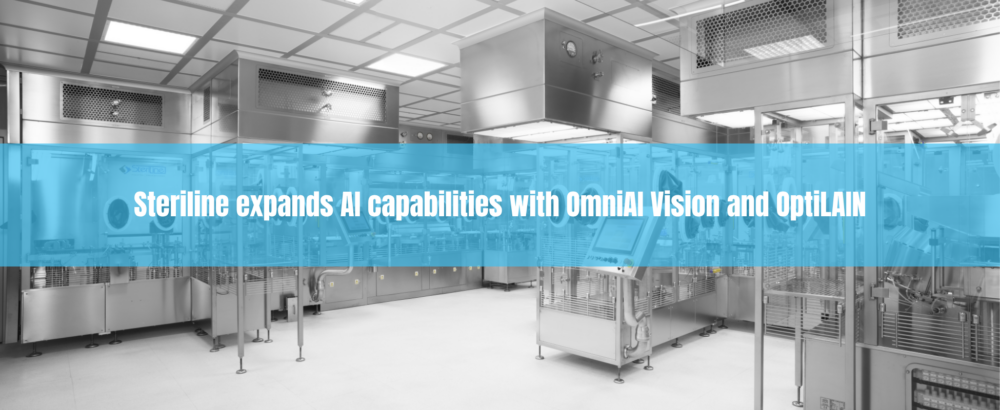
This summer, Steriline introduced two new AI-enabled technologies for sterile filling and finishing operations: OmniAI Vision, focused on intelligent image analysis, and OptiLAIN, a platform for continuous equipment monitoring and predictive maintenance.
The two technologies address different layers of the production process and are designed to work together, combining visual information with machine data.
Rethinking machine vision
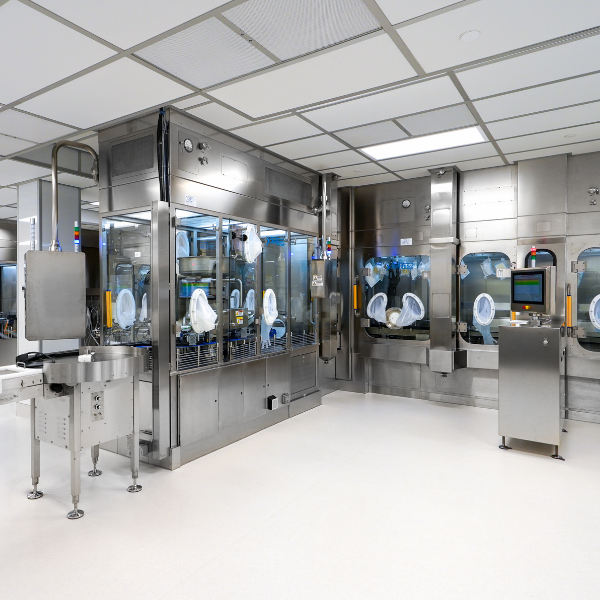
OmniAI Vision takes a different approach to conventional machine vision systems. Instead of using a dedicated camera or sensor for each individual function, Steriline’s system uses a limited number of strategically positioned cameras, located away from critical process areas.
The images are analysed in real time by AI algorithms that can extract and process multiple types of information simultaneously.
According to Steriline, this approach can reduce the number of devices installed inside an isolator or other containment system. Fewer components in these areas can help simplify cleaning and maintenance while supporting airflow management.
“This approach allows us to reduce the number of devices installed inside the isolator, improve laminar airflow, simplify cleaning operations and make the machine more accessible for maintenance,” says Alessandro Caprioli, Product Development Director at Steriline.
The company also sees the technology as a step towards increasingly autonomous filling and finishing equipment, with AI providing a more flexible way of observing and interpreting production activities.
A second layer of intelligence
OptiLAIN focuses on the equipment itself. The platform continuously monitors machine condition and performance, using data collected from the system’s sensors to identify changes and support predictive maintenance.
Steriline describes the relationship between the two technologies as complementary. OmniAI Vision monitors the process through cameras, while OptiLAIN analyses the machine through its internal data.
“The integration between intelligent image analysis and performance monitoring provides a complete view of the production process,” says Paolo Pozzi, Chief Service Officer at Steriline. “On one side, there is product quality and the correct execution of operations; on the other, the behaviour of the machine and changes in its efficiency.“
The aim is to give operators a clearer picture of what is happening during production and to provide information that can support faster and more informed decisions.
AI and the evolving GMP framework
The development comes as the regulatory framework surrounding artificial intelligence in pharmaceutical manufacturing continues to evolve.
In Europe, GMP Annex 22 is being developed specifically to address the use of artificial intelligence in medicines manufacturing. The EMA held a multi-stakeholder workshop in June and July 2026 to gather expert input for the development of the guidance.
The emergence of this framework reflects a broader need to ensure that AI-based technologies used in regulated manufacturing environments are appropriately controlled, validated and monitored.
For equipment manufacturers, this creates a balance between introducing more intelligent systems and ensuring that their operation remains transparent and sufficiently documented.
Steriline positions OmniAI Vision and OptiLAIN within this wider shift. The platforms are intended not simply to automate individual functions, but to continuously observe production activities, record significant events and provide operators with information that can support operational decisions.
From research to industrial application
The two technologies are the result of several years of research and development at Steriline. The company has worked with Politecnico di Milano and affiliated research centres, including through industrial PhD programmes involving both academia and industry.
Steriline says this collaboration has helped translate research into technologies designed for practical use in filling and finishing environments.
The company currently has more than 700 installations in over 50 countries. With OmniAI Vision and OptiLAIN, it is extending the role of AI from individual inspection and monitoring functions towards a more integrated approach to equipment intelligence.
The development illustrates a broader direction for sterile manufacturing: as production systems become increasingly connected, AI is moving closer to the machine itself. The challenge will be to combine this increased intelligence with the control, validation and documentation required in highly regulated pharmaceutical environments.