



As the EU pushes towards a circular economy and the PPWR compliance, the pharmaceutical industry faces a complex paradox: reducing its environmental footprint while strictly maintaining the uncompromising quality, safety and efficacy standards required for patient care.
So how can the industry bridge the gap between ESG targets and the realities of GMP compliance?
The “Ghost in the Room”: Tackling Sustainability Through Product-Level Data
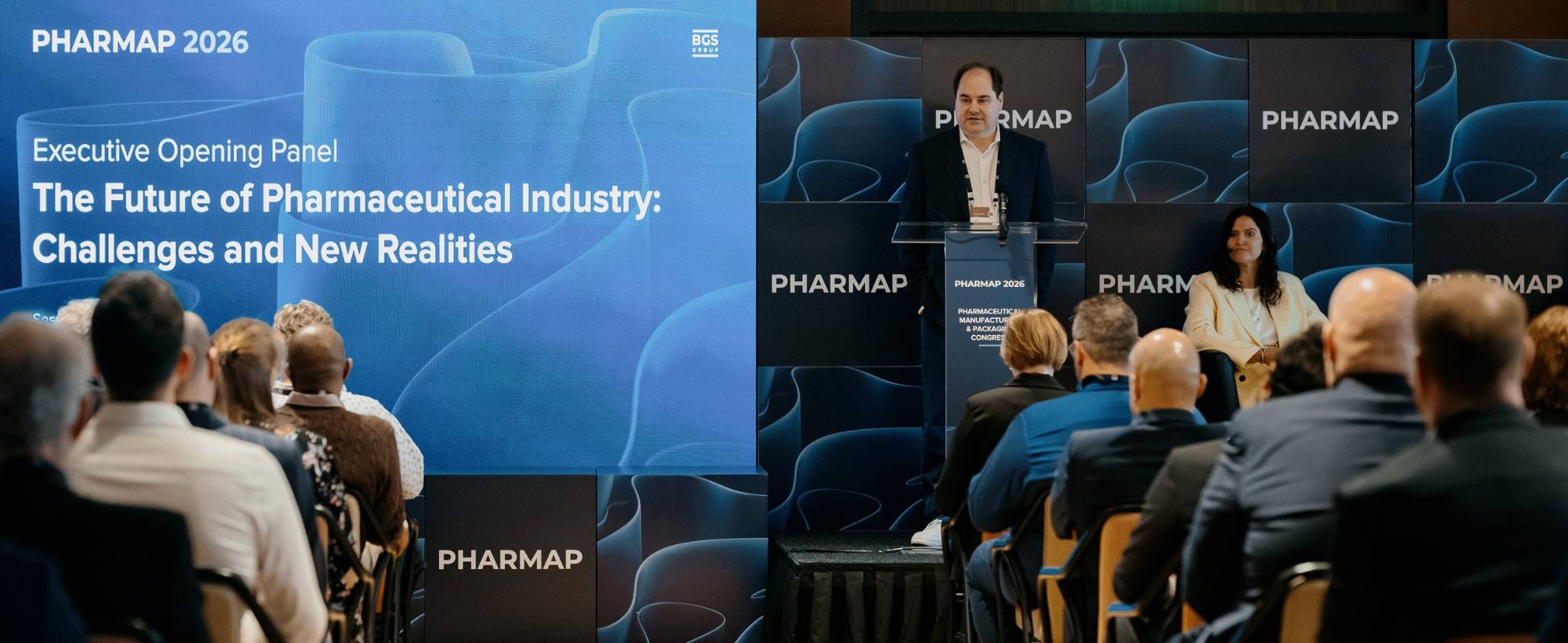
While many top pharma companies have committed to net zero by 2050, the real challenge lies in Scope 3 emissions, which account for over 90% of a typical pharmaceutical company’s carbon footprint. At PHARMAP 2026, Carlos García, Global EHS Governance Manager at ESTEVE, calls Scope 3 “the ghost in the room” – a broad, fragmented supply-chain footprint where “influence replaces control”.
García’s argument is that supplier programmes alone won’t deliver deep decarbonisation. A system-level review of products and processes is required. His deck cites an analysis in which purchased goods and services account for roughly 63–81% of major pharma companies’ Scope 3 emissions. By shifting the focus from corporate reporting to product-level metrics, companies can provide R&D, operations and procurement with actionable insights.
Industry-wide initiatives, such as the Pharma LCA Consortium and the recent publication of BSI PAS 2090, are developing pharma-specific frameworks to assess environmental impacts accurately. This allows leaders to prioritise actions that deliver the greatest carbon reductions.
The Packaging Dilemma: The Reality of Mono-Materials
Currently, the industry is actively moving away from complex, multi-layered plastics towards mono-material solutions that are PPWR-compliant.
However, as Jürgen Bodenmüller, Director of Business Development at SÜDPACK Medica AG, notes during the PHARMAP panel discussion, the transition to a circular economy is a complex engineering and regulatory challenge.

Recent case studies demonstrate the potential of mono-material innovations. For example, replacing traditional PVC/Alu blisters with advanced PP push-through lidding films and thermoforming films can reduce the carbon footprint (CO2) by 47% to 61%, while maintaining high transparency and mechanical performance.
Bodenmüller also emphasises that developing mono-materials for pharma requires strict avoidance of critical substances. Additives commonly used in standard packaging, such as amide-based slip agents, magnesium-based antiblocking additives, BHT and animal-derived calcium stearates, can migrate and potentially disrupt sensitive protein/enzyme systems or pose toxicological risks.
Preparing for PPWR requirements therefore requires specialised co-extrusion assets and rigorous validation against biocompatibility requirements, including ISO 10993-5 cytotoxicity testing. All of this must be achieved while still delivering the necessary moisture and oxygen barriers.
The Road Ahead – The Path to a Circular Pharma Economy
The transition to a circular, PPWR-compliant pharmaceutical industry is an ongoing journey – one that demands the embrace of mono-materials, the use of product carbon footprints (PCF) and fostering collaboration across the value chain. By taking these steps, the industry can move beyond compliance towards a genuinely resilient supply chain – delivering life-saving therapies to patients while reducing the environmental cost of care.
The conversation continues at PHARMAP 2027 (Berlin, 19–20 April), where pharma decision-makers compare lessons from PPWR implementation and discuss the regulatory, manufacturing and packaging agenda. This closed-door networking event is held in Berlin on 19–20 April 2027, hosted by Bayer AG and supported by GSK, Berlin-Chemie, ESTEVE and Vetter Pharma.